
Dewan Rakyat passes Cybercrimes Bill 2026 [WATCH]
July 1, 2026
By: Luqman Hakim, Mohamad Al As
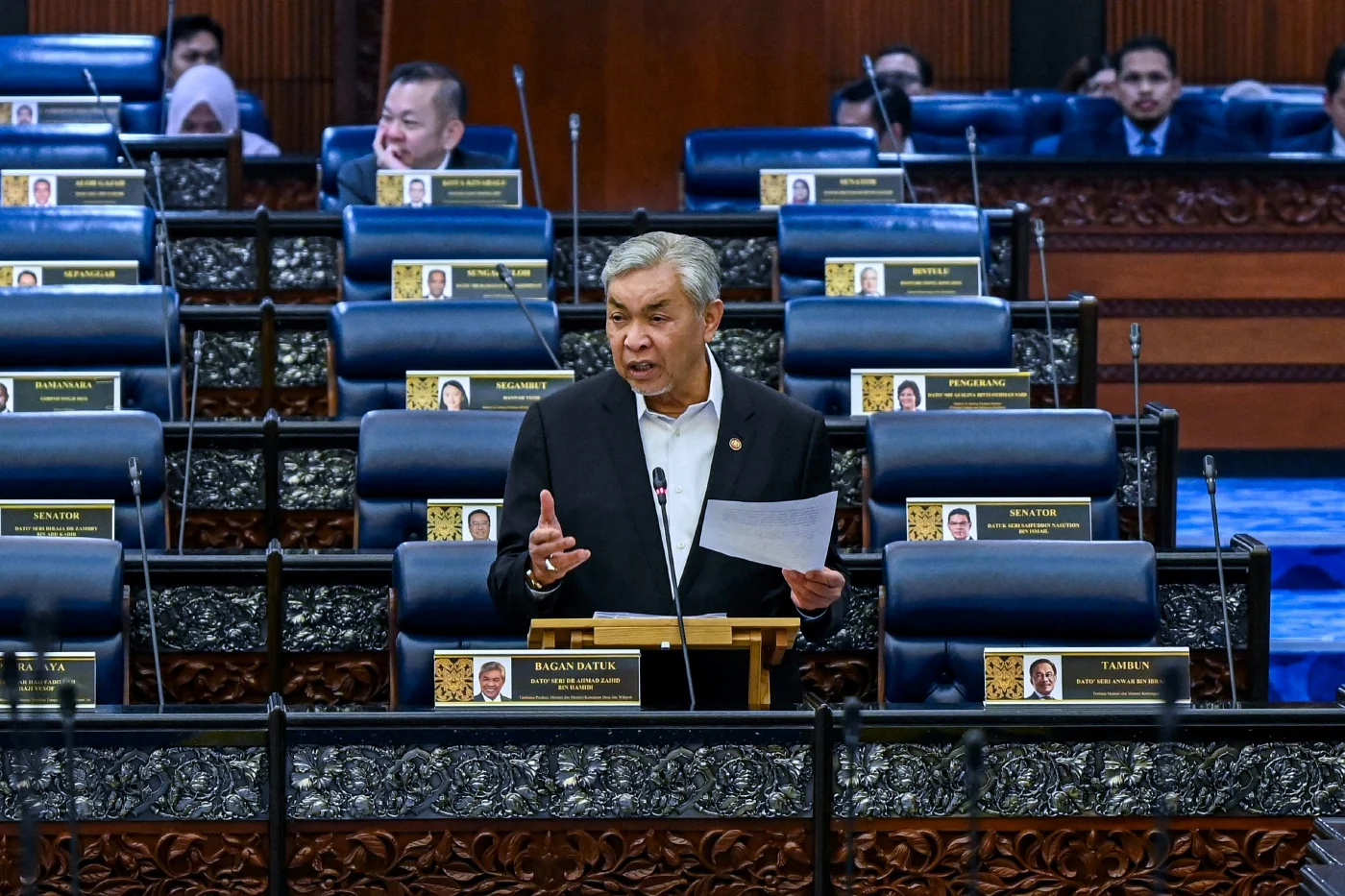
KUALA LUMPUR: The Dewan Rakyat today passed the Cybercrimes Bill 2026, with the government assuring that the new law contains sufficient safeguards to prevent abuse while strengthening Malaysia's ability to combat increasingly sophisticated cybercrime.
Winding up the debate, Deputy Prime Minister Datuk Seri Dr Ahmad Zahid Hamidi said the government had carefully considered concerns raised by 48 member of parliaments, who put forward more than 100 questions, proposals and criticisms during the debate.
He said seven key issues emerged repeatedly, namely fundamental rights and privacy, freedom of speech, artificial intelligence (AI), protection of vulnerable groups, enforcement capacity, cyber literacy and MyDigital ID.
"The government wishes to assure that none of the powers provided under this Bill are absolute or without control.
"Every power, particularly those relating to investigations, will be accompanied by clear checks and balances and remain subject to strict legal procedures," he said.
Zahid said powers to access computer systems or preserve computer data could not be exercised arbitrarily, as investigators would have to comply with procedures prescribed under existing laws.
He said preservation notices could only be issued when investigators were satisfied that specific data was reasonably required for investigations and where there was a risk that the information could be altered, deleted or destroyed if immediate action was not taken.
"The scope is limited only to the specific data identified in the notice issued. It is not a blanket power to access an entire computer system or all of a person's information," he said.
He also assured the Dewan Rakyat that the Bill would not override laws protecting sensitive government information, including the Official Secrets Act 1972.
Addressing concerns over freedom of expression, Zahid said the legislation was never intended to curb differing opinions or political discourse.
"This is not a law to control differences of opinion. Political views and freedom of speech will continue to be protected. The Bill focuses on cyber security and cybercrime," he said.
On AI-generated content, Zahid said rapidly advancing technologies such as generative AI offered significant benefits to productivity and innovation, but warned they could also be exploited for fraud, extortion, impersonation, exploitation and the spread of false information.
He said AI-generated material would not automatically constitute an offence, as prosecutors would still be required to prove criminal intent, the purpose of its use and the resulting impact.
Zahid said the recently established Cyber Security and Cryptology Development Centre under the National Cyber Security Agency (Nacsa) would strengthen the country's digital forensic capabilities by bringing together experts from universities, industry and enforcement agencies.
The Bill also introduced new offences not expressly provided for under existing laws, strengthening protection for victims, particularly women, children and senior citizens, who are increasingly targeted by cybercriminals through financial scams, sexual exploitation, the non-consensual sharing of intimate images and digital content manipulation.
He added that the government would continue strengthening cooperation with the Malaysian Communications and Multimedia Commission (MCMC), digital platform providers and international partners to enable the faster removal of unlawful online content.
Zahid said the National Scam Response Centre (NSRC), which operates around the clock, would also be enhanced through greater real-time information sharing among enforcement agencies, financial institutions and telecommunications providers.
On enforcement, he said police would remain the lead agency, with the Commercial Crime Investigation Department spearheading cybercrime investigations, while Nacsa would coordinate strategic efforts alongside MCMC, Bank Negara Malaysia and other relevant agencies.
"The government agrees with the views raised by MPs earlier and emphasises that harsher penalties alone are not the sole solution.
"Reducing cybercrime requires a comprehensive approach encompassing effective enforcement, enhanced investigative capabilities, public education, collaboration with the private sector and a high level of digital literacy."
He said police statistics showed cybercrime cases had risen from 25,479 in 2022 to 66,204 last year, an increase of more than 160 per cent over the period.
Addressing concerns over MyDigital ID, Zahid said the platform functions solely as a secure single sign-on authentication system and does not store users' personal data.
He said personal information remains in the National Registration Department's database, with MyDigital ID serving only as a secure gateway to reduce the risk of misuse.
Describing the Bill as a "game changer", Zahid said it would ensure Malaysia's legal framework remained relevant amid rapid technological developments while strengthening enforcement capabilities to better protect the public against increasingly complex cyber threats.
Source:
https://nst.com.my/news/nation/2026/07/1477937/dewan-rakyat-passes-cybercrimes-bill-2026-watch